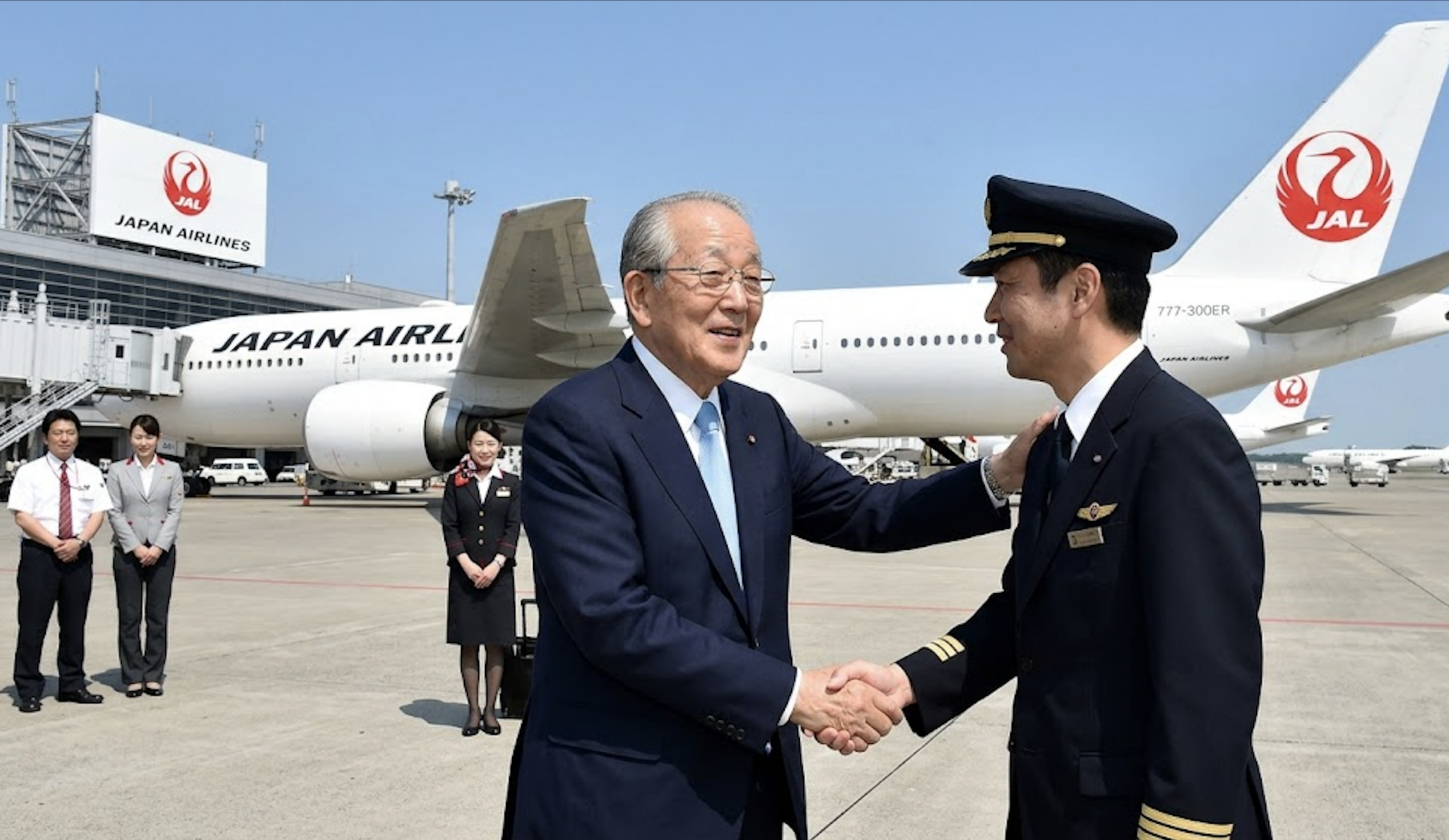
In the annals of corporate history, few stories are as dramatic or as spiritually grounded as the resurrection of Japan Airlines (JAL). In January 2010, the company didn’t just fail; it collapsed under the weight of a $25 billion debt, marking the largest non-financial bankruptcy in Japanese history. What followed was not a traditional “slash-and-burn” private equity restructuring. Instead, it was a transformation led by Kazuo Inamori, a 78-year-old Buddhist monk and legendary entrepreneur. This is the definitive analysis of how JAL moved from catastrophic failure to a record-breaking $8.5 billion IPO in just two years.
The Anatomy of a Corporate Collapse: Why JAL Failed
Before the “Miracle of JAL” could occur, one had to understand the rot within. The airline was suffering from a toxic cocktail of bureaucratic complacency and structural inefficiency.
1. The “Too Big to Fail” Delusion
As Japan’s national flag carrier, JAL employees suffered from a profound sense of entitlement. There was an unspoken belief that the state would always provide a safety net. This mindset birthed a culture where profitability was secondary to prestige.
2. Operational Inefficiency
-
The “Jumbo” Problem: JAL maintained a fleet of aging, fuel-hungry Boeing 747s. These aircraft were often flown half-empty, bleeding capital on every flight.
-
Political Interference: Under pressure from the government, JAL operated numerous “political routes” to remote Japanese airports that had zero economic viability.
3. Siloed Leadership
Management was detached from the front lines. Leaders were more concerned with internal corporate politics and seniority-based hierarchies than with the quality of customer service or the mechanics of the hangar.
When Prime Minister Yukio Hatoyama reached out to Kazuo Inamori—the founder of Kyocera and KDDI—he wasn’t just looking for a businessman. He was looking for a moral authority. Inamori, then a retired Buddhist monk, initially declined. He had no experience in aviation. However, he eventually accepted under two radical conditions that set the stage for the turnaround:
-
Zero Salary: By working for free, Inamori immediately stripped the unions and disgruntled managers of any “greed” narrative. His sacrifice was his authority.
-
Philosophical Autonomy: He demanded the right to overhaul the company’s “soul” before its balance sheet.
Phase 1: The “JAL Philosophy” and Mindset Shift
Inamori understood a fundamental truth: You cannot fix a balance sheet until you fix the corporate spirit. He introduced a 40-point “JAL Philosophy” booklet. To the elite, university-educated pilots and executives, phrases like “Be humble” and “Do the right thing as a human being” initially seemed like “kindergarten-level” platitudes. Inamori didn’t back down. He instituted mandatory leadership sessions that lasted late into the night. He challenged managers directly: “If you can’t love your employees, you can’t run this business.” He transitioned the focus from “protecting the brand” to “serving the passenger.”
Phase 2: “Amoeba Management” – Decentralizing Accountability
The technical cornerstone of the turnaround was Inamori’s signature Amoeba Management System. In a traditional hierarchy, only the CFO truly understands the profit and loss (P&L). Inamori broke JAL down into hundreds of small, autonomous units—or “amoebas.”
The Mechanics of the Amoeba:
-
Real-Time Data: Accounting frequency moved from quarterly to daily. Every unit knew exactly how much they spent and earned every 24 hours.
-
Micro-Entrepreneurship: Each unit (e.g., the catering team or the baggage handlers) became responsible for its own profitability.
-
Granular Savings: When catering teams realized that changing the preparation of a single shrimp could save millions of yen annually across the fleet, they didn’t need a directive from the top—they did it because they were “owners” of their unit’s success.