In the world of high-stakes business and geopolitical strategy, few narratives match the scale and precision of the House of Saud. To understand modern energy markets, one must first understand the origin of the state. The history of the Arabian Peninsula at the beginning of the 20th century resembled a complex knot of dynastic struggles and tribal clashes, where Abdulaziz ibn Saud was to become the central figure. This was not merely a military struggle; it was the ultimate startup venture in a “red ocean” of competition. The name of the state of Saudi Arabia dates back to 1902, when Abdulaziz al Saud—whose father had been deprived of power and exiled to Kuwait by the rival Rashidi family—decided to take revenge with the aim of returning his native city to his family’s hands. In modern business terms, this was a “hostile takeover” to reclaim lost assets. The first step of this vengeance was to capture the city of Riyadh, consolidate power, and move forward.
A remarkable fact should be noted here: the capture of Riyadh is considered one of the boldest episodes in the art of war. Strategy often outweighs resources. Abdulaziz had only 40–60 loyal warriors. This lean team utilized the element of surprise—a classic “disruptor” tactic. At night, they stealthily approached the Masmak Fortress, and when the governor of the fortress emerged from the gates in the morning, Saud seized the stronghold with a lightning-fast attack. To this day, the tip of a spear thrown during the attack remains embedded in that gate. After capturing the city, over the course of 30 years, Abdulaziz managed to subjugate most of the Arabian Peninsula and named the state after his own surname: Saudi Arabia. He demonstrated the power of “Brand Identity” by tying the nation’s name to his lineage. He became the country’s first king, whose word was law. When Abdulaziz captured Riyadh, the city occupied an area of only 1 square kilometer; 100 years later, it spanned 1,300 square kilometers. Currently, this city is the capital of Saudi Arabia.
The Search for “Black Gold” and Geopolitical Risk
Every great enterprise faces a “Valley of Death” where traditional revenue streams fail. Before the discovery of oil, Saudi Arabia’s main income came from duties collected from pilgrims visiting Mecca and Medina. However, the Great Depression of the 1930s sharply reduced the number of pilgrims, bringing the country to the brink of bankruptcy. In a masterclass of risk management, the King turned to international partnerships. In 1933, the American company Standard Oil of California—Socal for short, which later became Chevron—began a “great game” with Saudi Arabia, first exploring whether there was oil in the region or not. This was the ultimate venture capital play. The undertaking was risky because it was possible there would be no oil at all, but it was worth the risk because Britain was the first in the region—in Iran—to discover oil, and through the Anglo-Iranian Oil Company (AIOC, which would later become British Petroleum), they were extracting oil for the British Empire. The Americans wanted by all means to have their own oil outposts in the region and had to take the risk. Socal sent one of its best specialists, Fred Davies, to Arabia; he discovered Saudi Arabia’s black gold—oil—and negotiations began. The cost of analytical failure is high. Interestingly, before the Americans, British geologists had also studied the area but concluded that there was no oil in Arabia. This mistake cost Britain billions of dollars in losses and a concession of influence to the USA. Fred Davies and his team worked in hellish conditions—under 50-degree heat and chronic water shortages.
The Birth of Aramco and the Economic Revolution
The first significant discovery of oil took place in 1938 through the famous “Dammam No. 7” well, which was named the “Prosperity Well.” This became the “Minimum Viable Product” that proved the entire thesis of the kingdom’s future wealth.
The Americans committed to paying £5,000 for land rent, £50,000 if oil was found there, as well as percentages from the sale of the discovered oil. After long efforts and trials, oil was found, and by 1947, the Saudis were producing 20,000 barrels of oil per day. Ahead was the end of World War II, and the demand for oil was massive; all that remained was to extract and sell, extract and sell, not forgetting to count the dollars. Socal was joined by the American companies Texaco, ExxonMobil, and Standard Oil of New York, and these four American companies created the Arabian American Oil Company (Aramco) in Arabia. Abdulaziz received about $15 million annually from the aforementioned cooperation. A crucial event in this partnership was February 14, 1945, when US President Franklin Roosevelt and King Abdulaziz met on the cruiser USS Quincy. On that day, the “Oil for Security” alliance was signed, which remains a pillar of global energy policy to this day. This was the ultimate B2B (Business-to-Business) contract, trading a commodity for existential protection.
Institutional Building: Infrastructure and the Role of Bechtel
The King understood that the hen that lays the golden eggs was already in his hands, but the country was still at a medieval level. There were no roads and no means of communication. In business, capital is useless without infrastructure. King Abdulaziz understood that oil meant money, but having money alone was not enough to have a powerful state—infrastructure and domestic industry were needed; furthermore, most of the population was illiterate. As a leader, the advantage of the King of Saudi Arabia was that he understood their weak and strong points and, most importantly, strove to strengthen the weak points. This is a lesson in “SWOT Analysis” and executive humility. Initially, it was necessary to create infrastructure in the country, even the most basic of which was missing. And who was to build it? In particular, if there are no powerful personnel and companies in the country, one can invite them from abroad, and they chose the American company Bechtel. Bechtel brought a powerful group of architects and managers with them, and the Saudis were left to pay while simultaneously learning from them. They even invited American bankers to build the banking system. The Saudis demanded that Bechtel build modern roads, airports, hospitals, railways, hotels, and the 1,700 km Trans-Arabian Pipeline—Tapline—as well as temporary housing in Mecca (to remind you, so that pilgrims would have a place to stay during the Hajj when Muslims from different parts of the world come to Mecca for pilgrimage). The Tapline (Trans-Arabian Pipeline) was an engineering marvel of its time; it was designed to transport oil from the Persian Gulf to the Mediterranean Sea, bypassing the Suez Canal, which provided a massive economic advantage.
Internal Diplomacy and “Soft Power”
Abdulaziz was not just a warrior; he was a brilliant social engineer. He knew that the peninsula could not be held by force alone. He practiced what we now call “Stakeholder Management.” Abdulaziz was a quite far-sighted diplomat because, by conquering the entire Arabian Peninsula, he had created great hostility toward himself from other Arabian tribes, and it was necessary to rectify all that. Abdulaziz had two options: either neutralize them or draw them to his side; he chose the policy of winning them over and created an open court through which he heard everyone’s grievances. This created a “Customer Feedback Loop” at a national level.
Whoever came to the royal palace was heard, well-fed, and sent on their way. All this created a great stir on the peninsula, and trust in the King grew; additionally, he created infrastructure—hospitals, ports, telephone communication, roads, schools, etc.—showing that he cared for his people, which was indeed the case. If internal conflicts were not settled, options such as marriages between the children of rival tribal leaders or bribery were put into effect. By eliminating internal enmity, the number one problem for the Saudi King became changing the terms of income received from Aramco in relations with the Americans and, ultimately, taking over Aramco for himself. The King also applied marriage diplomacy: he married the daughters of defeated or influential tribal leaders, thereby creating blood ties throughout the country. This guaranteed that no one would rebel against their own “relative.”
The Human Capital Strategy: Education as a Guarantee of Sovereignty
Saudi Arabia chose the “Education through replacement” model. They did not want to remain dependent on foreign specialists forever. This is the essence of building a sustainable, “in-house” team. The royal family understood well that they were heavily dependent on foreign management specialists and decided to send their princes—all of them—abroad to study at universities like Princeton and Oxford. In the next step, they compelled the Americans to ensure that the core work was done by Saudis—referring to welders, drillers, repairmen, tractor drivers, crane operators, carpenters, etc. The King also ordered that capable students with good indicators be selected from schools and sent abroad to study logistics, geography, oil-related specialties, law, and petroleum engineering to advance their own personnel. The King selected the best from the universities and sent them abroad with his own funds to be educated and return to the homeland. Entering a university was rigorous, as, for example, only 200 were selected out of 12,000. In Aramco, the Saudis gradually pushed their own personnel forward to take the company into their own hands. Sometimes, achieving a single goal could take 50 years, but they did it. This policy was named “Saudization.” It allowed them to avoid the “resource curse,” where a country has wealth but lacks the knowledge to manage it.
Negotiation Mastery: Economic Pressure and Negotiation Tactics
In the late 1940s, the Saudis began to realize that American companies were receiving huge profits, while only a tiny portion reached the country. The time had come for a “contract renegotiation.” By strengthening their personnel policy, the Saudis slowly began to take an interest in Aramco’s internal affairs and understand how much income the company was generating. Initially, they only took their designated funds, but the King understood: such a blessing should be in one’s own hands. The Saudis’ tactic was as follows: to show that they were “simple Arabs” who understood nothing, only made expenses, and thought about their monthly “share.” This was a brilliant “Low-Profile” strategy. And the Americans experienced their first shock when the Saudis informed them that, thanks to submitted taxes, they had calculated Aramco’s earnings, which constituted a truly large figure—in 1949, 38% was paid to the USA in the form of taxes, i.e., $40 million. And they gave them time to review the percentages given to the royal family. At the same time, a conflict had matured between Iran and the Anglo-Iranian Oil Company (AIOC), as a result of which Iran nationalized its oil industry, which frightened the Americans. The Americans, who held the helm of Aramco, refused to add any money, angering the Saudis. The advantage of the Saudis was that, unlike the Iranian leader Mohammad Mossadegh, they were in no hurry to make loud declarations. They acted cold-bloodedly.
The Saudi Arabian authorities applied a strategy of “small steps,” which eventually brought the desired result. This is the “Kaizen” approach to geopolitical conquest. The Saudis were patient people and decided not to attack all at once but to periodically increase the pressure. Soon, the Saudi Arabian State Revenue Committee went to work: customs duties began to apply to Aramco’s production, fees began to be collected from every airplane landing, and fees began to be collected for the maintenance of the pipeline—after all, this was Saudi Arabian territory, and if a pipe goes through that territory, payment must be made; however, it was again in vain. This time, the Saudis suggested their ambassador in the USA meet with Aramco’s management and discuss the situation, explaining that the company must pay more money to the King; otherwise, they would find someone else to handle the extraction. As a result, the Saudis achieved a situation where Aramco’s income, after calculating numerous expenses and being taxed, was split into equal halves; additionally, Aramco committed to paying the payments mentioned above—for land rent and usage. At the same time, Aramco would pay customs duties for goods brought into and taken out of the country, making a major step toward the nationalization of Aramco.
The World’s Most Valuable Company: Saudi Aramco
The 1970s became a turning point. The energy crisis and the strengthening of OPEC gave Saudi Arabia the best opportunity. There is an expression—”Patience is life”—and the Saudis probably realized the meaning of this expression well and waited for the right moment. And the right moment was not long in coming. As I already mentioned, in 1951, Iran nationalized the Anglo-Iranian Oil Company, renaming it the National Iranian Oil Company (NIOC). The British responded by imposing a blockade and closing the Persian Gulf, after which tankers filled with Iranian oil remained in the ports. In the process, the Korean War intensified. Oil production was reduced in Iran, and the empty space was filled by Aramco. The Saudis, seeing such volumes, proposed to the Americans to acquire Aramco’s shares, which belonged to four American companies—Exxon, Texaco, Standard Oil of New York (Mobil), and Standard Oil of California (Chevron)—while simultaneously giving their representative a seat on the board of directors. The Americans refused, though in 1959 they already gave two seats to the Saudis on the board. The Saudis did not rush but quietly increased their power.
It is important to mention here the role of Zaki Yamani, who was the Minister of Oil of Saudi Arabia for many years. Thanks to his negotiating genius, nationalization took place not through confiscation but through phased buyouts. By 1973, Saudi Arabia’s daily production was 8.4 million barrels of oil, which constituted 21% of the global oil production volume. And this figure already made the Saudis a heavyweight in the oil market and in OPEC. Of course, every country tried to nationalize its oil companies, and Saudi Arabia was no exception, but the Saudis did not simply go against the USA; instead, they played a better game: they simply bought all of Aramco’s shares, according to some sources for about $2 billion, renaming it Saudi Aramco. In those years, this was a massive sum of money. While other oil countries were nationalizing and making enemies, the Saudis acted differently purely to avoid upsetting the Americans. If it weren’t for Abdulaziz’s personnel policy, it is unlikely the Saudis would have been able to take the company into their hands and manage it; meanwhile, it was their own personnel who took over the management of that giant.
Abdulaziz’s Legacy and Lessons for the Future
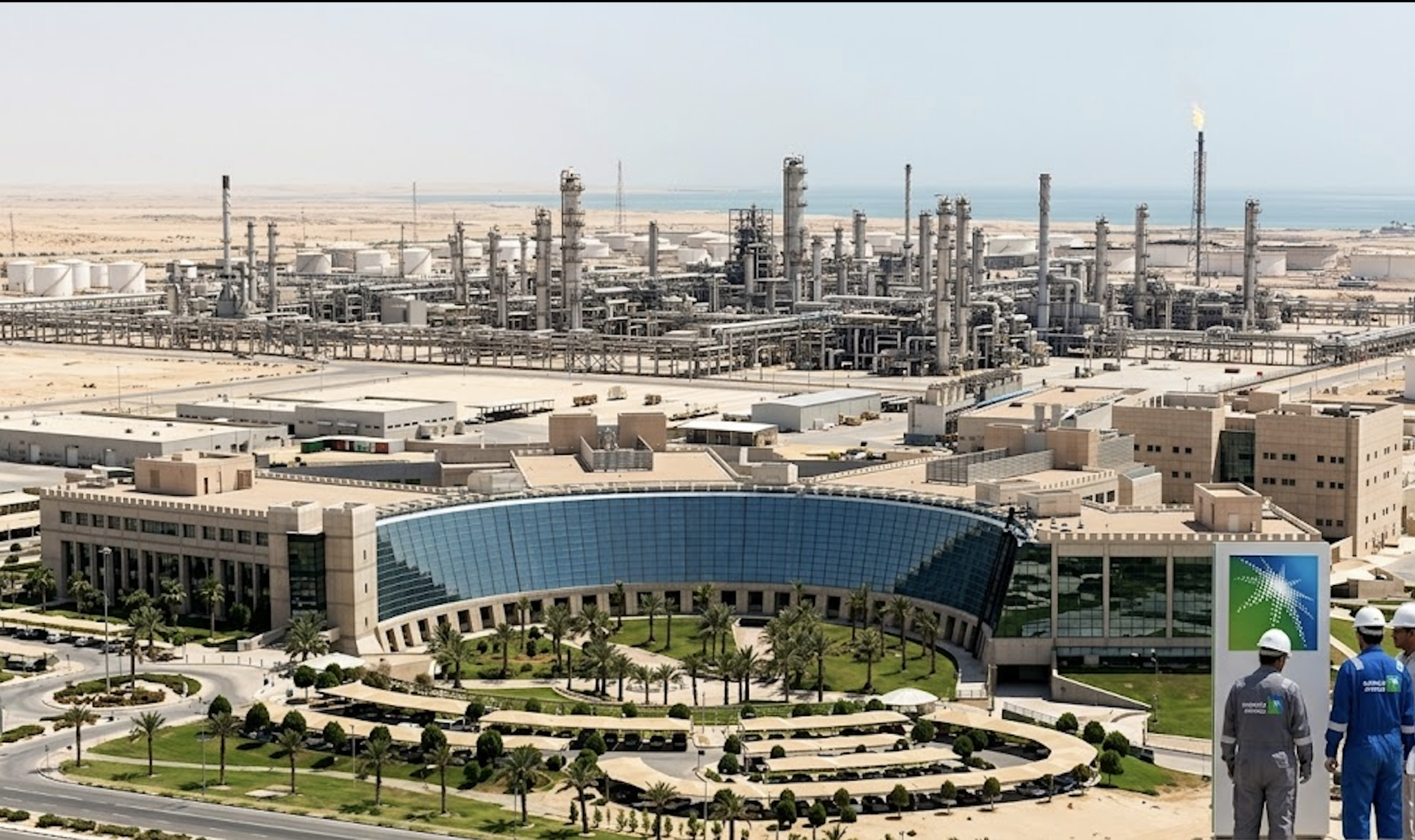
Today, Saudi Aramco is valued at more than $2 trillion. That became possible thanks to a man who saw decades ahead. What can be learned from the King of the Saudis?
-
Acting—if you don’t have technology or personnel, invite them from abroad, involve them, make friends with them, and learn.
-
Growing brilliant specialists in key positions—if it weren’t for brilliant specialists in the oil sector like Abdullah Tariki and Ahmed Yamani, and the chief financier Abdullah Suleiman, it would have been difficult for the Saudis to take over Saudi Aramco in a peaceful and quiet way. It was on such strong personnel that the King relied.
-
Own personnel—Today, about 67,000 people work at Saudi Aramco, and the majority are Saudis, people whose previous generation learned from the Americans instead of relying only on foreigners. The King understood well that if Saudi Aramco became theirs, who would work there? It was necessary from the very beginning to involve Saudis in all the work.
The example of Saudi Arabia shows that natural resources are only a means, while real wealth is a well-thought-out educational system and diplomatic flexibility, which allow for the preservation of those resources and making them serve the interests of the state.